OIO OIDC profile
What is OIO OIDC?
OIO OIDC is a profile of the OpenID Connect (OIDC) protocol tailored to specific requirements and standards. It ensures secure and standardized authentication and authorization processes, particularly for public sector services.
Configure Identify to meet OIO OIDC profile requirements
The OIO OIDC profile specifies the following requirements and validations:
Authorization Request:
- Redirect URIs must use HTTPS. If a custom URL scheme is used (e.g., for native apps), it must comply with RFC 7595.
- Mandatory parameters:
state,code_challenge,code_challenge_method,nonce. - Prohibited parameters:
display,response_mode,id_token_hint. - Optional parameter:
max_age.
Token Endpoint:
- Required response claim:
auth_time. - Prohibited response claim:
nbf.
- Required response claim:
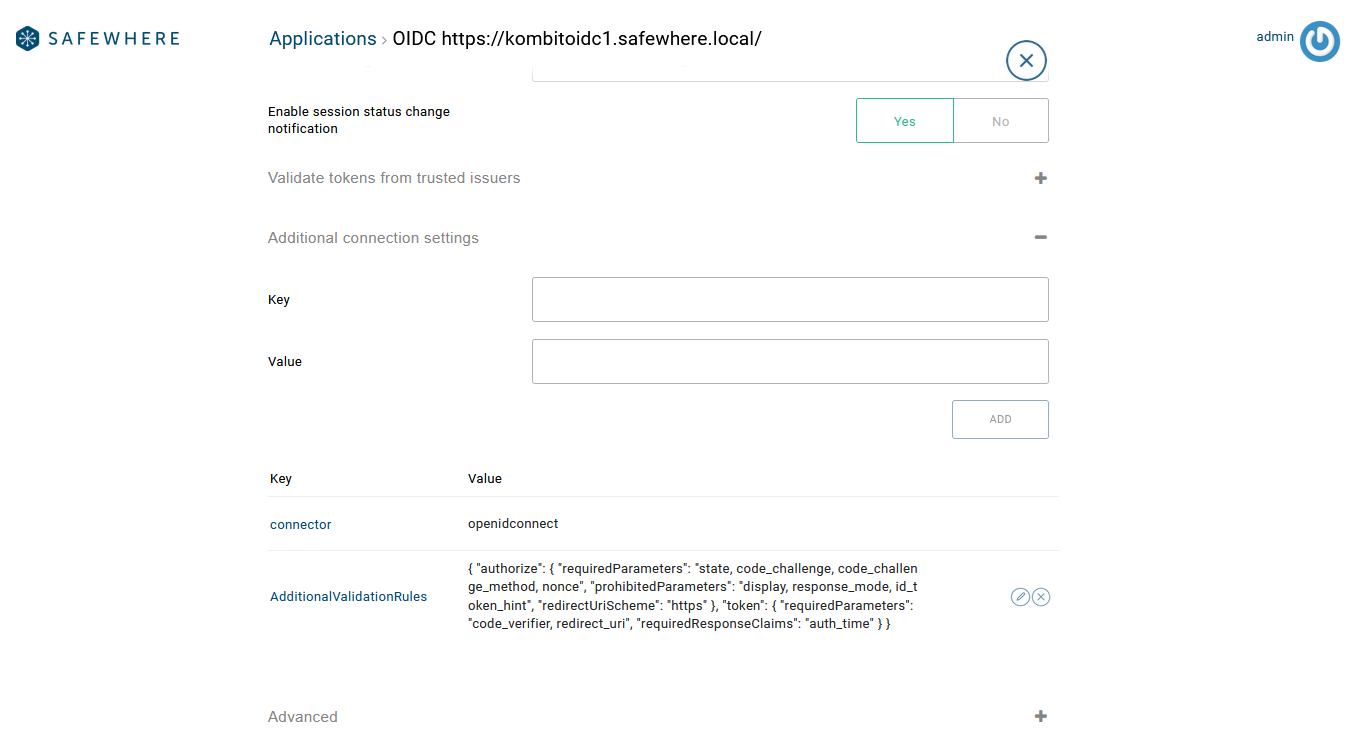
To meet these requirements, Identify supports additional validation rules through an extra setting on the OIDC client connection:
- Setting name:
AdditionalValidationRules - Setting value format and example:
  {
    "authorize": {
      "requiredParameters": "state, code_challenge, code_challenge_method, nonce",
      "prohibitedParameters": "display, response_mode, id_token_hint",
      "redirectUriScheme": "https",
      "codeChallengeMethod": "S256"
    },
    "token": {
      "requiredParameters": "",
      "requiredResponseClaims": "auth_time",
      "prohibitedResponseClaims": "nbf"
    }
  }
By configuring these additional rules, you can ensure that the OIDC client complies with the OIO OIDC specification for both the Authorization and Token endpoints.
Note: For native OIDC applications that use custom URL schemes, you can specify multiple allowed schemes in the
redirectUriSchemesetting as comma-separated values (e.g.,"redirectUriScheme": "https,myapp"). The OAuth server will validate the redirect URI against all configured schemes.
How to set up an OIO OIDC client
To set up an OIO OIDC client, follow these steps:
- OIDC client connection settings
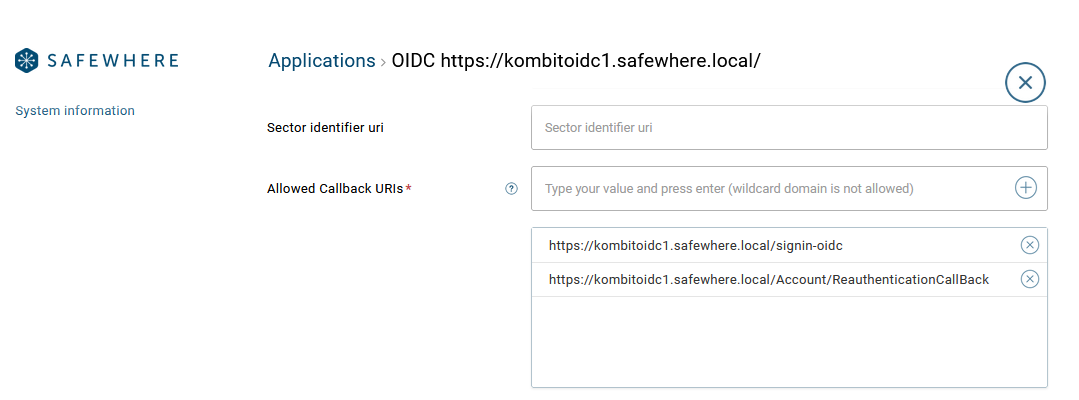
Ensure that the redirect URI uses HTTPS or follows RFC 7595 for custom URL schemes:
- Additional configuration:
Configure the following JSON rule as an additional setting named AdditionalValidationRules on the OIDC client connection. This setting enforces validation of required and prohibited parameters according to the OIO OIDC profile:
{
  "authorize": {
	  "requiredParameters": "state, code_challenge, code_challenge_method, nonce",
	  "prohibitedParameters": "display, response_mode, id_token_hint",
	  "redirectUriScheme": "https",
	  "codeChallengeMethod": "S256"
  },
  "token": {
	  "requiredParameters": "",
	  "requiredResponseClaims": "auth_time",
	  "prohibitedResponseClaims": "nbf"
  }
}